

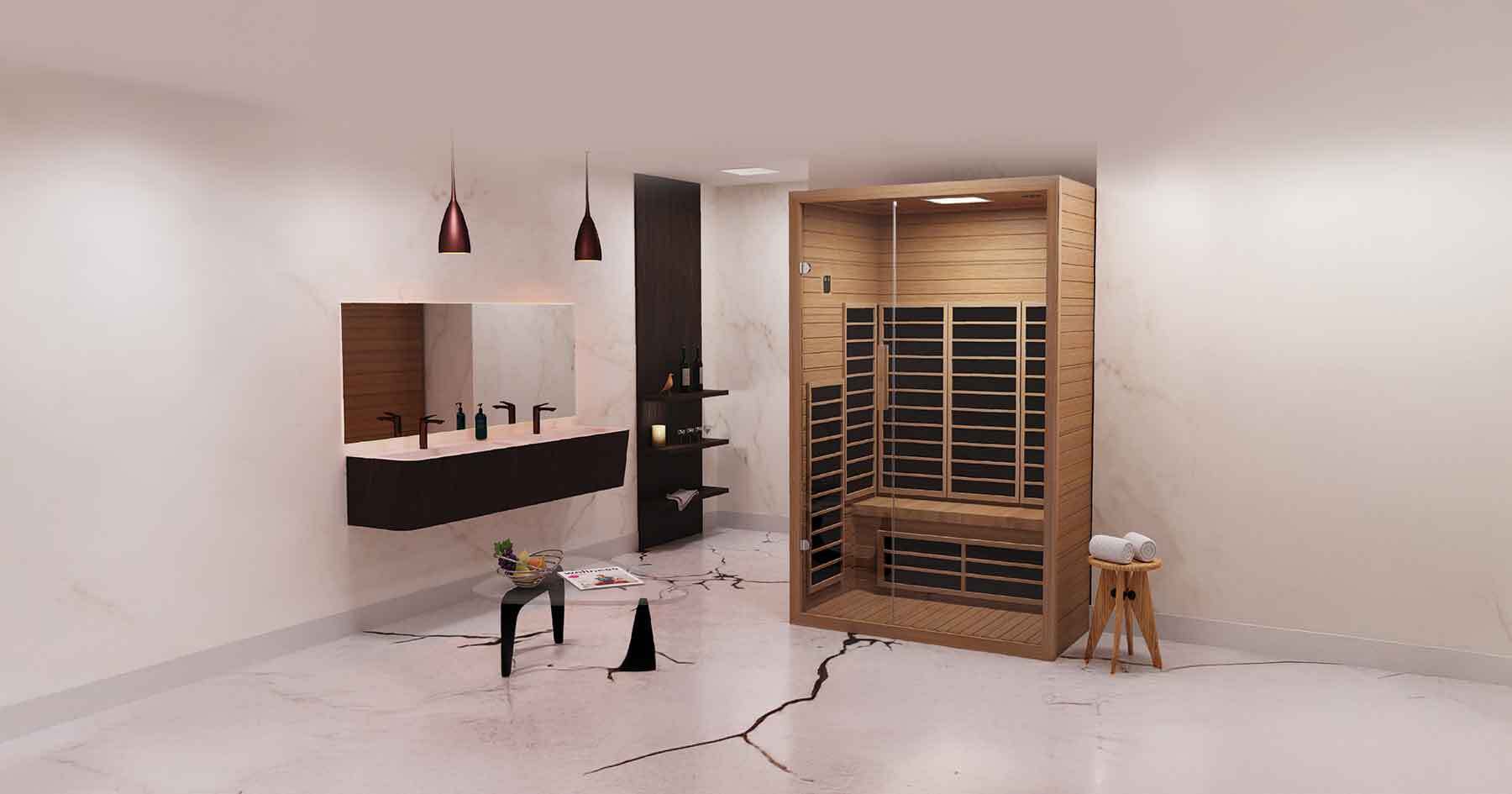
Have you been considering bringing a steam shower or sauna experience into your home? Are you curious about which option truly fulfils its wellness promise?
Both are worth considering seriously. A home sauna and a steam bath are no longer hotel amenities or spa luxuries. Design-forward Indian homes are increasingly incorporating them for good reason. Both offer a retreat from the pace of daily life, a chance to physically unwind and mentally reset. But they work differently, feel different, and suit different people.
This blog breaks down the difference between a sauna and a steam bath, so you can make a choice that genuinely fits how you live.
Sauna Vs Steam Room: At a Glance
|
Factors |
Sauna |
Steam Room |
|
Heat and Humidity |
Dry heat, 70°C to 100°C |
100% humidity, 40°C to 50°C |
|
Respiratory Health |
Comfortable for asthma patients |
Helps with mucus clearance and inflamed airways |
|
Skin Benefits |
Cleanses, unclogs pores, removes impurities |
Hydrates and nourishes for softer, glowing skin |
|
Cardiovascular Health |
Increases blood flow, lowers blood pressure |
Moderate benefits due to lower heat intensity |
|
Relaxation & Stress Relief |
Relaxes muscles, eases aches, aids mental clarity |
Promotes deep relaxation and de-stressing |
|
Hydration & Hygiene |
Less hydrating but more hygienic |
More hydrating but requires frequent cleaning |
Difference Between Steam and Sauna Bath: A Detailed Comparison
Heat and Humidity:
This is the most fundamental distinction between the two. A room sauna runs on dry heat, with temperatures sitting anywhere between 70°C and 100°C. The air is arid, the heat is intense, and sweating begins quickly.
A bathroom steamer, by contrast, fills the space with moist heat at a gentler 40°C to 50°C. The humidity level sits at 100%, which creates an entirely different physical sensation. One feels like standing in a desert at noon. The other feels like being wrapped in warm fog.
Artize's steam cabins bring this experience at home, with a built-in steam generator, Rainjoy overhead shower with rain and waterfall function, integrated body shower, digital touchpad, Bluetooth music system, thermostatic mixer, and a glass door enclosure that makes the whole setup feel less like a bathroom addition and more like a private spa suite.
Skin Benefits:
A sauna works through sweat. The intense dry heat opens pores, flushes out impurities, and encourages detoxification at a surface level. The result is cleaner, clearer skin over time.
A steam shower environment does something different. The moisture itself is doing the work, hydrating the skin from the outside in, leaving it softer, more elastic, and visibly healthier with regular use.
Cardiovascular Health:
Your heart rate increases the moment you sit down in a sauna, much the way it would on a brisk walk. Blood vessels widen, circulation picks up, and over time, regular sessions in an infrared sauna or traditional setup tend to bring blood pressure down a notch. Steam rooms offer something similar, just dialled back. The lower heat means your cardiovascular system isn't pushed quite as hard, so the gains are real but milder.
Artize's Rainjoy series includes an LED variant with an RGB front panel that can be remotely controlled to shift colour and ambience based on mood or time of day. Much like an infrared sauna works on the body through invisible wavelengths of light and heat, chromotherapy works through visible light to influence mood, energy, and calm.
Relaxation and Stress Relief:
There's a reason people walk out of a home sauna looking like a weight has been lifted off them. The deep, dry heat works its way into tight muscles and loosens what days of stress and poor posture have knotted up. A steam room takes a gentler route to the same place. The warm, thick air wraps around you and slows everything down: your breathing, your thoughts, and the general noise in your head, almost without you trying.
Detoxification:
Sweating is the body's most direct route to releasing what it does not need. A sauna, with its higher heat intensity, produces more sweat and therefore more active detoxification. A bathroom steamer supports this process too, though more gently, which can make it a better entry point for those newer to heat therapy.
Hydration and Hygiene:
Sweat is the body's oldest form of detoxification, and a sauna accelerates this process. The higher the heat, the more it pours out, carrying along whatever your system has been holding onto. A bathroom steamer does the same job more slowly. It's less dramatic, sure, but that gentler intensity often makes it the easier place to start if heat therapy is new to you.
Sauna vs. Steam Room: Which is Better?
It comes down to what your body and your routine actually need. If you want intense dry heat, deep muscle relief, and a more hygienic, low-maintenance setup, the room sauna is the stronger choice. If you want warmth, moisture, skin hydration, and a gentler entry into heat therapy, the steam shower is the one to build around.
As a luxury Indian bath brand under the legacy of Jaquar Group, Artize offers a range of steam and sauna solutions built to the same standard as every other product in our portfolio: where craft, engineering, and design intention meet without compromise. All steam and sauna products carry a five-year warranty, because a wellness investment should hold up as long as the decision behind it.
FAQs
Q. Which is best, sauna or steam room?
A. Both offer unique benefits; saunas provide dry heat for deep relaxation, while steam rooms offer moist heat for skin hydration.
Q. Is steam or sauna better for detox?
A. Saunas stimulate sweating more intensely, thus slightly preferable for detoxification.
Q. Is steam or sauna better for the skin?
A. Steam baths keep the skin more hydrated and nourished compared to saunas.
Q. Can I use the sauna every day?
A. Yes, however, moderation is key; keep it to a maximum of 15 to 20 minutes.
Q. How long should I sit in a sauna?
A. A 15-20-minute session is best if you want to gain the perfect benefit without overheating